
Why Most “Prepared Families” Fail (And How to Fix It Without Overcomplicating Everything)
There’s a common pattern in emergency preparedness:
People start strong… then stop maintaining it.
The Centers for Disease Control and Prevention notes that preparedness only works when it’s updated regularly—not just assembled once.
The 3 Common Failure Points
1. Outdated supplies
- Expired food
- Dead batteries
- Ill-fitting clothing for kids
2. No assigned roles
Everyone assumes someone else is responsible.
3. Overcomplication
Too many systems = no system used consistently
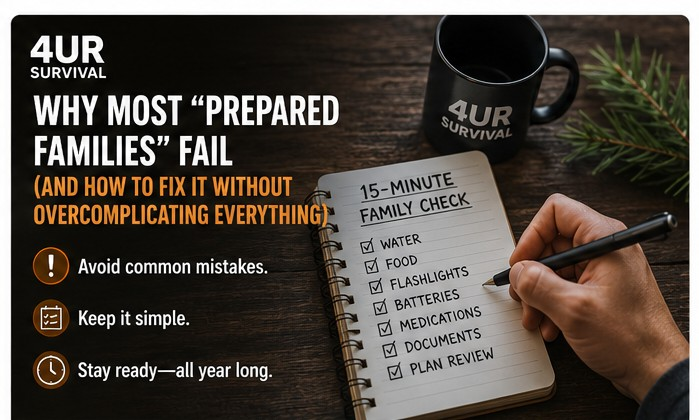
The Simple Fix: The 15-Minute Family Check
Once every 6 months:
- Check food and water
- Test flashlights
- Update clothing sizes
- Review meeting points
That’s it.
Make It a Habit, Not a Project
Tie it to something you already do:
- Daylight savings time
- School semester changes
Preparedness isn’t about being “the survival expert.”
It’s about being the family that doesn’t panic when things go wrong—because you already thought through the basics.
22nd Jun 2026
Recent Posts
-
Personal Safety & First Aid: Essential Preparedness for Everyday Life
Why Every Family Should Learn Basic Safety and First Aid Skills Emergencies rarely happen when it's …13th Jul 2026 -

Self-Reliance & Homesteading: Practical Steps You Can Start Today
Building a More Self-Reliant Lifestyle One Step at a Time In a world where prices seem to rise every …6th Jul 2026 -
Why More Families Are Stocking Emergency Supplies in 2026
Over the last few years, many families have started looking at emergency preparedness differently. W …29th Jun 2026