
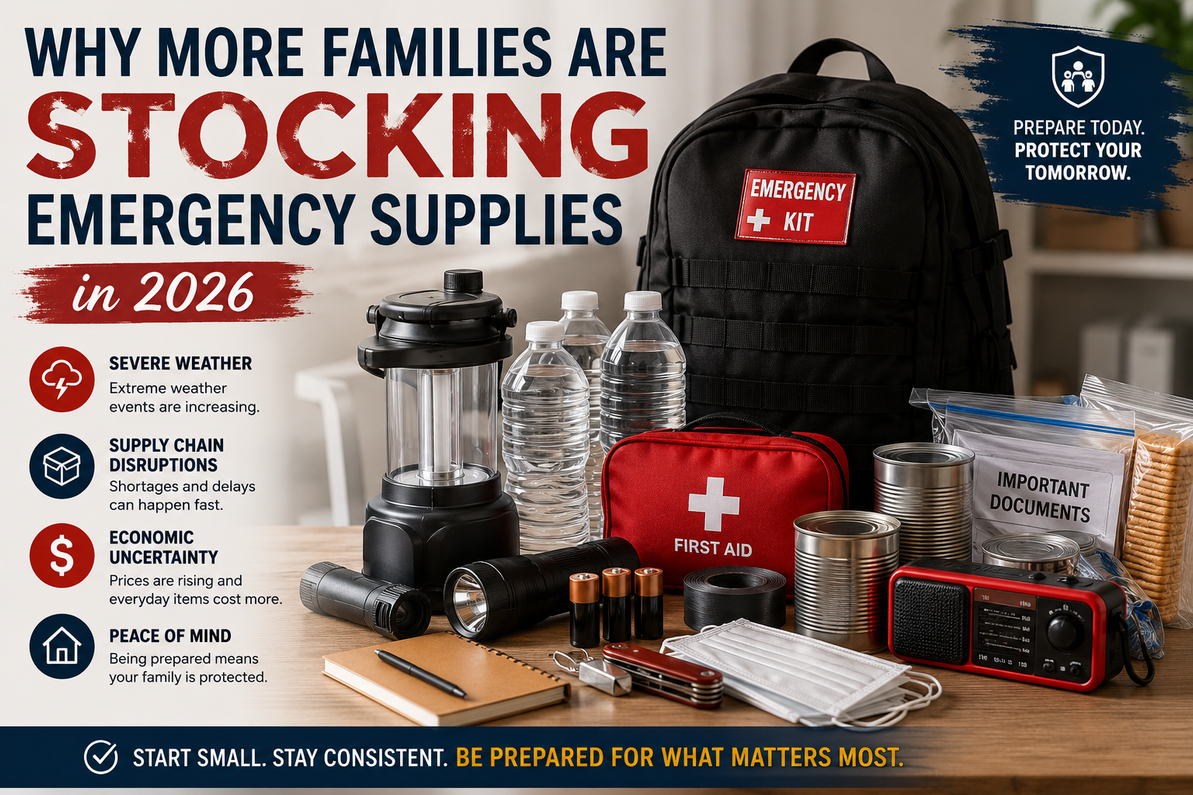
Why More Families Are Stocking Emergency Supplies in 2026
Over the last few years, many families have started looking at emergency preparedness differently. What once felt like something “only preppers do” has now become a practical conversation happening in everyday households across the country. From severe weather events and power outages to supply chain disruptions and rising costs, people are realizing how quickly daily routines can change. Families are not preparing out of fear—they are preparing because they want peace of mind and the ability to take care of the people they love during unexpected situations.
Organizations like the Centers for Disease Control and Prevention continue to encourage families to build emergency kits and prepare for disruptions before emergencies happen. The CDC recommends households keep emergency food, water, medications, first aid supplies, flashlights, batteries, and important documents readily available in case of disasters or emergencies. Their guidance emphasizes that preparation helps families respond faster and reduce stress during difficult situations.
One major reason preparedness has become more important is the increase in unpredictable weather and emergency events. Across the United States, families have experienced hurricanes, wildfires, winter storms, flooding, and extended power outages that disrupted access to groceries, gas stations, pharmacies, and communication systems. During these moments, even basic supplies can become difficult to find. Having emergency essentials already stored at home helps reduce panic and gives families more stability during uncertain situations.
Another reason many people are building emergency supplies is economic uncertainty. Rising grocery prices, supply shortages, and shipping delays have reminded families how quickly everyday necessities can become harder to access or more expensive. Preparedness is no longer just about natural disasters—it’s also about creating a level of financial and household readiness. Having extra food, water, hygiene items, batteries, and medical supplies can help families avoid last-minute emergency spending during stressful situations.
The good news is that emergency preparedness does not need to happen all at once. One of the biggest misconceptions is that families need to spend hundreds of dollars immediately. In reality, preparedness works best when built slowly and consistently over time. Start with the basics first:
- bottled water
- shelf-stable food
- flashlights
- batteries
- first aid supplies
- medications
- phone chargers and backup power banks
The CDC also recommends storing at least one gallon of water per person per day and several days of nonperishable food supplies.
Families with children, elderly relatives, or medical needs should take extra time to customize their emergency plans. The CDC encourages families to keep copies of important documents, emergency contacts, medications, and specialty supplies ready in waterproof containers. Small practical steps—like keeping backup medications, portable chargers, and emergency contact lists—can make a major difference during emergencies.
One of the most practical things families can do today is create a simple “72-hour emergency kit.” This is a kit designed to support your household for at least three days if utilities, transportation, or stores become unavailable. A basic kit may include:
- water and nonperishable food
- flashlights and batteries
- hygiene products
- first aid supplies
- emergency blankets
- important documents
- cash in small bills
- portable phone chargers
You do not need perfection to begin—you simply need a starting point.
Preparedness also creates something many families are looking for right now: peace of mind. Knowing you have supplies available during emergencies can reduce stress and help you focus on protecting your family instead of scrambling during a crisis. Emergency preparedness is ultimately about creating stability, readiness, and confidence during uncertain moments.
If you are ready to begin building your family’s emergency supplies, start small and stay consistent. Even adding a few items each month can make a meaningful difference over time. At 4urSurvival.com, we offer practical preparedness products designed to help families build their emergency kits one step at a time. One great place to start is with a compact emergency kit that can easily be stored in your vehicle, office, or home for quick access during emergencies. Preparedness is not about panic—it’s about being ready before you need it.
Recent Posts
-
Personal Safety & First Aid: Essential Preparedness for Everyday Life
Why Every Family Should Learn Basic Safety and First Aid Skills Emergencies rarely happen when it's …13th Jul 2026 -
Self-Reliance & Homesteading: Practical Steps You Can Start Today
Building a More Self-Reliant Lifestyle One Step at a Time In a world where prices seem to rise every …6th Jul 2026 -
Why More Families Are Stocking Emergency Supplies in 2026
Over the last few years, many families have started looking at emergency preparedness differently. W …29th Jun 2026