
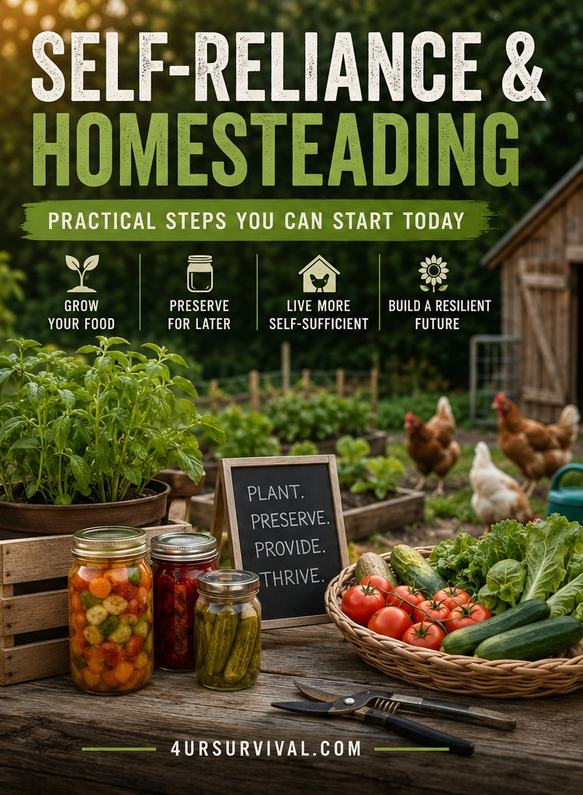
Self-Reliance & Homesteading: Practical Steps You Can Start Today
Building a More Self-Reliant Lifestyle One Step at a Time
In a world where prices seem to rise every year and unexpected events can disrupt daily life, many people are rediscovering the value of self-reliance. The good news is that becoming more self-sufficient doesn't require a large farm, acres of land, or years of experience. Small, practical changes can make a meaningful difference.
Self-reliance is simply about developing skills and habits that help you provide for yourself and your family. Whether you're living in a suburban neighborhood, an apartment, or a rural community, there are opportunities to become less dependent on outside systems and more confident in your ability to meet everyday needs.
One of the easiest places to begin is with food. Growing even a small portion of your own food can reduce grocery costs while teaching valuable skills. A few containers on a patio or balcony can produce herbs such as basil, parsley, and cilantro. Tomatoes, peppers, lettuce, and green onions are also excellent options for beginners.
Another practical step is learning how to preserve food. Freezing, dehydrating, and canning can help extend the life of fresh produce and reduce waste. If you find a great sale at the grocery store or harvest more than you can use immediately, preservation methods can help you make the most of those resources.
Creating a household inventory is another simple but often overlooked practice. Knowing what food, supplies, and essentials you already have can prevent unnecessary purchases and help you stay organized. Consider keeping a list of pantry items, cleaning supplies, batteries, and other household necessities.
Simple Self-Reliance Projects for Beginners
If you're ready to take action, here are several practical projects you can start today:
Start a Kitchen Herb Garden
A small herb garden requires minimal space and can provide fresh ingredients year-round. Herbs are among the easiest plants to grow and can save money over time.
Learn One Food Preservation Skill
Choose one method and focus on mastering it. Freezing vegetables, dehydrating fruit, or learning basic water-bath canning are all valuable skills.
Create a Three-Month Pantry Plan
Rather than stockpiling randomly, identify foods your family regularly eats and gradually build a reserve. Purchase a few extra items during each shopping trip and rotate them regularly.
Reduce Household Waste
Look for opportunities to reuse containers, compost food scraps, and repair items instead of replacing them immediately. Small habits can lead to significant savings.
Develop a Useful Skill
Learning basic sewing, gardening, home maintenance, or cooking from scratch can increase your independence and confidence.
The goal of self-reliance is not perfection. It is progress. Every skill learned and every practical step taken increases your ability to adapt, provide, and thrive regardless of circumstances.
Start small. Plant one herb. Learn one new skill. Preserve one batch of food. These simple actions can become the foundation of a more resilient and self-sufficient future.
Checkout 4ursurvival.com for more informative blogs
Recent Posts
-
Personal Safety & First Aid: Essential Preparedness for Everyday Life
Why Every Family Should Learn Basic Safety and First Aid Skills Emergencies rarely happen when it's …13th Jul 2026 -
Self-Reliance & Homesteading: Practical Steps You Can Start Today
Building a More Self-Reliant Lifestyle One Step at a Time In a world where prices seem to rise every …6th Jul 2026 -

Why More Families Are Stocking Emergency Supplies in 2026
Over the last few years, many families have started looking at emergency preparedness differently. W …29th Jun 2026