
Preparing Children for Emergencies Without Scaring Them
As parents and caregivers, one of our biggest responsibilities is helping children feel safe and prepared.
But how do you explain earthquakes, wildfires, severe weather, and other emergencies without creating unnecessary fear?
The answer is to make preparedness part of everyday family learning.
Children don't need to understand every detail about natural disasters. They do need to know basic safety rules, who to contact, and what to do when an unexpected situation occurs.
Preparing children doesn't have to be frightening. It can be a positive family activity that builds confidence, awareness, and responsibility.
Why Should Children Learn About Emergency Preparedness?
Emergencies can happen at home, at school, while traveling, or when children are participating in activities away from their parents.
Teaching children simple safety skills helps them understand how to respond and where to seek help.
For example, a child who understands where to meet a parent after an evacuation may feel more confident than a child who has never discussed the possibility.
FEMA and the American Red Cross provide educational resources specifically designed to help children understand disaster preparedness.
One example is FEMA's Prepare with Pedro program, which uses games and age-appropriate activities to introduce children to emergency planning.
Resource: Ready.gov – Prepare with Pedro.
7 Ways to Teach Children About Emergency Preparedness
1. Create a Family Emergency Meeting Place
Choose a safe location near your home where family members can meet if they become separated.
Also identify a second meeting location outside your neighborhood.
Make sure children understand where these locations are and how they can get help reaching them.
2. Teach Children Important Contact Information
Help children learn their parents' names, phone numbers, and other important emergency contact information.
For younger children, consider placing a contact card in their backpack.
Older children can practice memorizing important phone numbers.
3. Practice Basic Emergency Safety
Teach children simple, age-appropriate safety instructions.
For example, during an earthquake, children should learn:
-
Drop to their hands and knees.
-
Cover their head and neck under sturdy furniture.
-
Hold on until the shaking stops.
Practice these steps together in different rooms of your home.
Use the CDC's earthquake safety instructions to make sure your family is practicing correctly.
4. Build a Child-Friendly Emergency Kit
Children may feel more comfortable knowing their personal necessities are included in the family's emergency supplies.
Consider including:
-
A change of clothing.
-
Personal hygiene supplies.
-
Age-appropriate snacks.
-
A comfort item.
-
A small flashlight.
-
Important contact information.
-
Necessary medications and medical supplies.
Keep in mind that comfort items can be particularly important for younger children during stressful situations.
5. Explain Emergency Supplies
Show children where emergency food, water, flashlights, and first aid supplies are kept.
Explain that these supplies are reserved for situations when the family needs them.
You can even turn this into a simple learning activity by asking children to identify different emergency items and explain what each one does.
6. Practice Family Emergency Drills
Practice simple scenarios, such as leaving the house during an evacuation or identifying a safe place during an earthquake.
Keep activities calm, positive, and appropriate for each child's age.
The goal is familiarity, not fear.
7. Talk About Trusted Adults
Children should understand which adults they can approach for help.
These may include:
-
Parents and caregivers.
-
Teachers.
-
School personnel.
-
Trusted relatives.
-
Emergency responders.
Explain that if they become separated from their family, they should seek help from an appropriate trusted adult.
What Should Be Included in a Family Emergency Plan?
Your family emergency plan should address several important areas.
Emergency Contact Information
Write down the names and phone numbers of important family members and emergency contacts.
Meeting Locations
Identify one meeting location near your home and another outside your neighborhood.
School Emergency Procedures
Understand the emergency procedures used by your children's schools and childcare providers.
Evacuation Routes
Identify safe ways to leave your home and neighborhood.
Medical Information
Keep records of allergies, medications, and other important medical information.
Pets
Include arrangements for transporting and caring for pets.
Communication
Discuss how your family will communicate if phone service becomes unreliable.
FEMA provides a family communication planning resource that families can complete together.
Ready.gov – Family Communication Plan.
Don't Forget About School Preparedness
Parents should familiarize themselves with the emergency procedures used by their children's schools and childcare providers.
Ask questions such as:
-
How are parents notified during an emergency?
-
Where are children taken during an evacuation?
-
What happens if parents cannot immediately reach the school?
-
How does the school handle emergency reunification?
-
What supplies does the school keep available?
Having this information ahead of time can help parents make informed decisions.
Make Emergency Preparedness a Family Activity
You can make preparedness educational without turning it into a frightening conversation.
Try these activities:
Emergency Supply Scavenger Hunt: Ask children to locate the flashlight, emergency radio, and first aid kit.
Family Contact Challenge: Practice remembering important family phone numbers.
Emergency Drawing Activity: Have children draw a picture of their family's emergency meeting place.
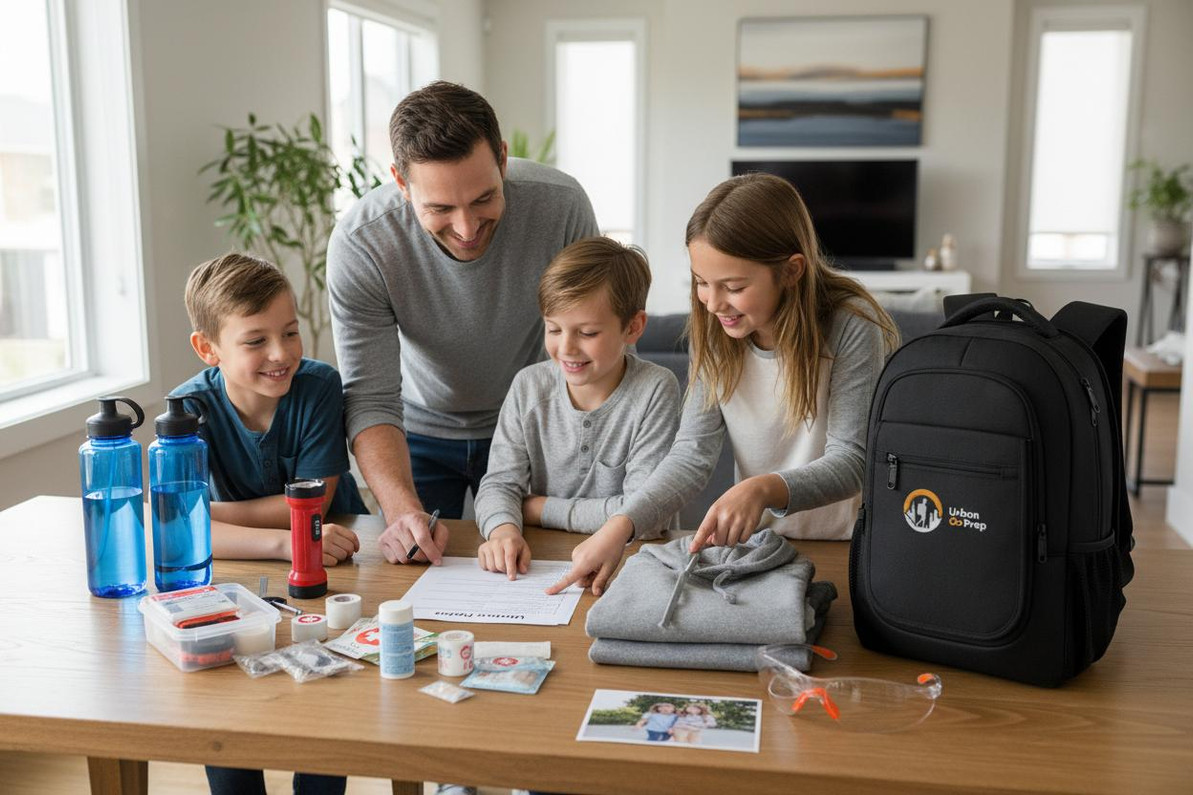
Backpack Preparation: Let children help organize a small emergency backpack with appropriate personal items.
These activities help children become familiar with emergency preparedness while giving parents an opportunity to reinforce important safety lessons.
Prepared Families Start with Prepared Parents
Children learn by watching the adults around them.
When parents organize emergency supplies, practice family plans, and discuss safety calmly, children learn that preparedness is a normal part of taking care of one another.
At 4URSurvival, we encourage families to make emergency preparedness a household priority.
Start with the basics, involve your children, and build your emergency supplies over time.
Because protecting your family begins before an emergency happens.
Visit 4URSurvival.com to explore emergency preparedness solutions.
Additional Government Resources:
Recent Posts
-
Earthquake Preparedness: Lessons Every California Family Should Remember
Living in California means understanding that earthquakes are part of our state's natural environmen …7th Dec 2026 -

Preparing Children for Emergencies Without Scaring Them
As parents and caregivers, one of our biggest responsibilities is helping children feel safe and pre …2nd Nov 2026 -

Emergency Food and Water: How Much Does Your Family Really Need?
When preparing for an emergency, two of the most important necessities are food and water. During an …5th Oct 2026