
Emergency Food and Water: How Much Does Your Family Really Need?
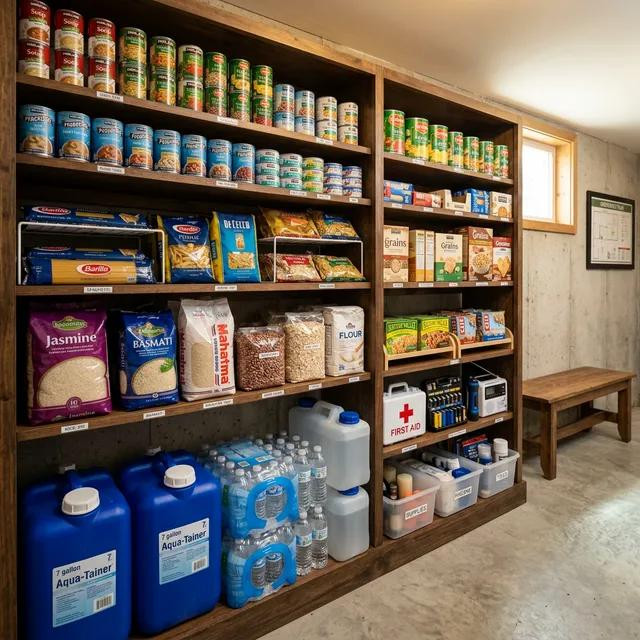
When preparing for an emergency, two of the most important necessities are food and water.
During an earthquake, wildfire, severe storm, or extended power outage, access to grocery stores, clean drinking water, and other everyday necessities may become limited.
Most families have food in their kitchens. However, how much of that food could actually be used if the electricity stopped working or the water supply became unavailable?
Emergency food and water planning helps ensure your household has essential resources available when normal services are disrupted.
The good news is that you don't have to figure everything out at once. You can start with a few basic calculations and gradually build a supply that meets your family's needs.
How Much Water Should You Store?
The Centers for Disease Control and Prevention recommends storing at least one gallon of water per person per day for at least three days.
This water can be used for drinking, cooking, brushing teeth, and other basic needs.
The CDC also recommends trying to store a two-week supply when possible.
Here is what that looks like for different household sizes:
| Household Size | 3 Days | 14 Days |
|---|---|---|
| 1 person | 3 gallons | 14 gallons |
| 2 people | 6 gallons | 28 gallons |
| 3 people | 9 gallons | 42 gallons |
| 4 people | 12 gallons | 56 gallons |
| 5 people | 15 gallons | 70 gallons |
These quantities are starting points. You may need additional water for hot weather, pets, medical needs, infants, and other household circumstances.
Government source: CDC – How to Create and Store an Emergency Water Supply.
What Kind of Emergency Water Should You Store?
There are several ways to prepare an emergency water supply.
Commercially Bottled Water
Unopened commercially bottled water is one of the CDC's recommended options for emergency water storage.
Keep it in a cool location away from direct sunlight and observe the manufacturer's expiration or best-by guidance.
Stored Household Water
If you store tap water in your own containers, use food-grade containers designed for water storage.
Follow CDC cleaning, storage, and replacement recommendations. The CDC advises replacing water stored in self-filled containers every six months.
Water Purification Supplies
Water purification tablets can provide an additional preparedness option.
However, it is important to understand that not every purification method removes every contaminant. Follow the manufacturer's directions and public health guidance.
If water may contain fuel, chemicals, or other toxic substances, boiling or ordinary disinfection will not necessarily make it safe.
For detailed instructions, visit the CDC's emergency water guidance.
What Kind of Emergency Food Should You Store?
Emergency food should be selected based on your family's nutritional needs, dietary restrictions, and ability to prepare meals without electricity.
Consider these options:
1. Ready-to-Eat Emergency Food
Food that requires little or no preparation can be especially useful during power outages and other disruptions.
2. Emergency Food Bars
Emergency food bars provide convenient, portioned calories and are easy to organize in emergency kits.
Check serving sizes, calorie information, ingredients, and storage requirements.
3. Shelf-Stable Meals
Choose products that can be stored safely without refrigeration and have clear preparation instructions.
4. Canned and Packaged Foods
Canned vegetables, beans, meats, soups, and other shelf-stable products can supplement your emergency food supply.
Remember to keep a manual can opener available.
5. Special Dietary Foods
Not everyone can eat the same foods.
Consider food allergies, infant feeding needs, gluten-free requirements, and other household dietary restrictions.
An emergency is not the time to discover that your stored food is unsuitable for someone in your family.
How Much Emergency Food Does Your Family Need?
Start by considering the number of people in your household and how much food each person normally requires.
For example, a family of four should plan for meals and snacks for every household member for at least three days.
If you have emergency food products, read the labels carefully.
Check:
-
Total calories per package.
-
Number of servings.
-
Shelf life.
-
Storage temperature.
-
Preparation requirements.
-
Drinking water requirements.
A package may contain several servings, so make sure you understand the actual quantity available.
Your goal should be to have enough appropriate food to meet your family's needs, not simply to accumulate packages.
Why Food Safety Matters During Power Outages
Having food available is important, but knowing how to keep it safe is equally important.
According to the CDC:
-
An unopened refrigerator generally keeps food safe for up to four hours without electricity.
-
A full freezer can maintain safe temperatures for approximately 48 hours if unopened.
-
A half-full freezer can maintain safe temperatures for approximately 24 hours if unopened.
Keep refrigerator and freezer doors closed as much as possible.
After four hours without power, discard perishable refrigerated foods unless they have been kept safely cold using another method.
Never taste food to determine whether it is safe.
Source: CDC – Keep Food Safe After a Disaster or Emergency.
Create an Emergency Food and Water Storage Plan
Here is a simple way to begin:
-
Calculate the number of people in your household.
-
Determine your minimum three-day water requirement.
-
Identify food that can be stored safely without refrigeration.
-
Include supplies for children and pets.
-
Review food allergies and dietary needs.
-
Check expiration dates and storage conditions.
-
Expand your supplies toward a two-week reserve when possible.
Consider keeping a written inventory so you know what you have and when items need to be replaced.
Make Emergency Food and Water Planning Easier with 4URSurvival
At 4URSurvival, we believe preparing for emergencies should be a practical part of household planning.
Our emergency preparedness kits are designed to help families organize essential supplies, including emergency food and water products.
We know that families have many responsibilities, and preparing for an emergency can seem like another task on an already long list.
Having a convenient starting point can make the process easier.
Don't leave your family's basic necessities to chance.
Prepare today. Because being ready is better than wishing you had prepared.
Explore 4URSurvival.com to learn more about emergency preparedness solutions.
Additional Government Resources:
Recent Posts
-
Earthquake Preparedness: Lessons Every California Family Should Remember
Living in California means understanding that earthquakes are part of our state's natural environmen …7th Dec 2026 -

Preparing Children for Emergencies Without Scaring Them
As parents and caregivers, one of our biggest responsibilities is helping children feel safe and pre …2nd Nov 2026 -
Emergency Food and Water: How Much Does Your Family Really Need?
When preparing for an emergency, two of the most important necessities are food and water. During an …5th Oct 2026