
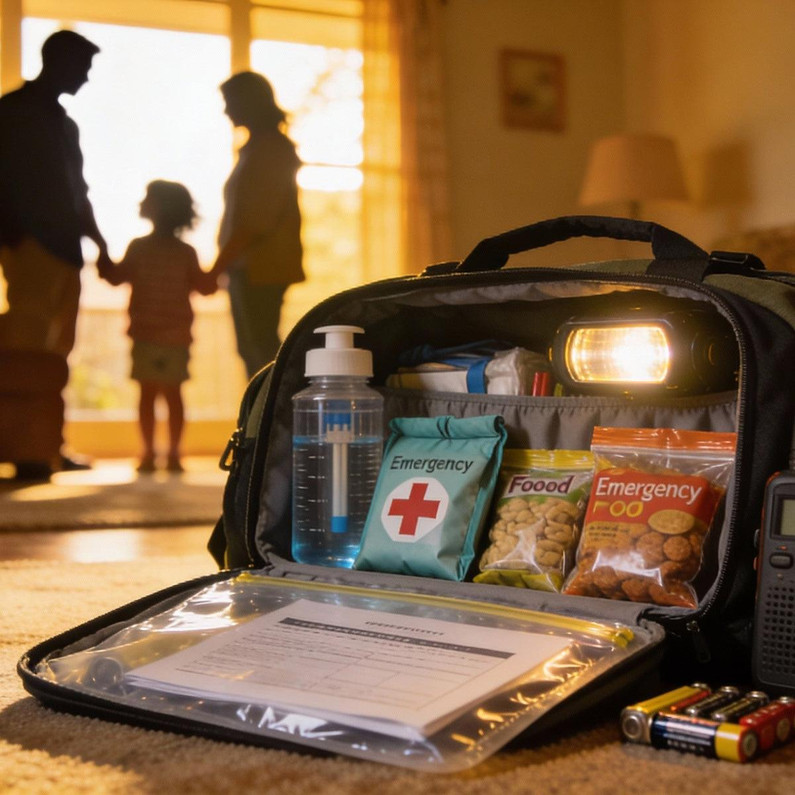
Earthquake Preparedness: Lessons Every California Family Should Remember
Living in California means understanding that earthquakes are part of our state's natural environment.
An earthquake can happen without warning and may affect homes, businesses, transportation, electricity, water service, and communication systems.
Whether you live in Northern California, Southern California, or somewhere in between, earthquake preparedness should be part of your family's emergency planning.
While we cannot control when an earthquake happens, we can take practical steps to prepare our households.
Why Is Earthquake Preparedness Important in California?
California has significant earthquake hazards because of its active fault systems.
The U.S. Geological Survey (USGS) emphasizes that preparation, planning, and practice are important steps toward reducing earthquake-related risks.
Earthquake preparedness involves more than simply purchasing an emergency kit.
It also includes securing furniture, identifying safe places in your home, understanding evacuation procedures, and having supplies available.
The USGS and its preparedness partners outline seven steps for earthquake safety, including securing your space, planning to be safe, organizing disaster supplies, and knowing how to respond during an earthquake.
Source: USGS – Seven Steps to Earthquake Safety.
What Should You Do During an Earthquake?
One of the most important earthquake safety recommendations is:
DROP, COVER, AND HOLD ON.
According to the CDC, most people can protect themselves during an earthquake by following these steps.
DROP: Get down onto your hands and knees before the shaking knocks you down.
COVER: Protect your head and neck under a sturdy table or desk. If shelter isn't available, move near an interior wall and cover your head and neck with your arms.
HOLD ON: Hold onto your shelter until the shaking stops.
If you are indoors, generally stay indoors. If you are outdoors, move to an open area away from buildings, trees, power lines, and other potential hazards.
Do not run outside while the building is shaking.
The CDC also explains that modern doorways are not necessarily safer than other locations inside a home. A sturdy table or desk is generally a better shelter option.
Official guidance: CDC – Safety Guidelines During an Earthquake.
7 Ways to Prepare Your Home for an Earthquake
1. Secure Heavy Furniture
Secure tall bookcases, cabinets, televisions, and other heavy items that could fall during shaking.
Pay particular attention to furniture located in children's bedrooms and frequently used living areas.
2. Identify Safe Locations
Identify sturdy tables or desks where family members can take cover.
Make sure children understand which locations are safe in different rooms.
3. Keep Emergency Supplies Accessible
Store emergency kits in locations where household members can find them.
Avoid placing essential supplies somewhere that may be difficult to access after an earthquake.
4. Prepare for Power Outages
Keep flashlights, extra batteries, and an emergency radio available.
Have backup charging options for phones and other essential devices.
5. Store Drinking Water
The CDC recommends at least one gallon of water per person per day for three days as a starting point.
For a family of four, that means at least 12 gallons for three days.
6. Create a Family Communication Plan
Establish meeting places and identify an out-of-area contact.
Write down important phone numbers in case you cannot access your smartphone.
7. Practice Earthquake Safety
Practice Drop, Cover, and Hold On with your household so everyone understands what to do.
Consider participating in an organized earthquake drill such as the Great ShakeOut.
Learn more: Great ShakeOut Earthquake Drills.
What Should Be in Your California Earthquake Emergency Kit?
Every household should consider having:
Food and Water
-
Drinking water.
-
Emergency food supplies.
-
Water purification supplies.
-
Manual can opener if needed.
Safety Supplies
-
First aid kit.
-
Flashlights.
-
Extra batteries.
-
Emergency radio.
-
Whistle.
-
Emergency blankets.
Personal Supplies
-
Necessary medications.
-
Hygiene products.
-
Extra clothing.
-
Important family documents.
-
Supplies for children and pets.
Remember that an emergency kit should reflect your household's actual needs.
You may also want a portable emergency kit for your vehicle or workplace.
What Happens After an Earthquake?
Preparedness does not end when the shaking stops.
After an earthquake, there may be additional hazards.
The CDC advises households to watch for:
-
Damaged buildings.
-
Damaged power lines.
-
Gas leaks.
-
Water line damage.
-
Fires.
-
Aftershocks.
If you feel another earthquake, Drop, Cover, and Hold On again.
Avoid damaged buildings and follow instructions from local emergency officials.
If you suspect a gas leak, leave the area and contact the appropriate emergency service from a safe location.
For additional information, visit CDC – Safety Guidelines After an Earthquake.
Don't Forget About Emergency Alerts
California offers earthquake early warning resources through the Governor's Office of Emergency Services.
The Earthquake Warning California program provides information about receiving warnings through:
-
The MyShake smartphone app.
-
Android Earthquake Alerts.
-
Wireless Emergency Alerts.
These systems may provide seconds of warning before shaking arrives in some situations.
They do not predict earthquakes, and warnings are not guaranteed for every earthquake.
Learn more: Earthquake Warning California.
Don't Wait Until the Ground Starts Shaking
Earthquake preparedness is something California families should take seriously.
You don't need to purchase everything at once. Start with the essentials, organize your supplies, and continue building your household emergency plan.
At 4URSurvival, our goal is to help families take practical steps toward becoming better prepared for unexpected emergencies.
Our company was founded by two sisters following the 1989 Bay Area earthquake. That experience helped inspire our commitment to helping households understand the importance of emergency readiness.
Our emergency preparedness kits provide a convenient starting point for organizing important supplies.
You cannot control when an earthquake happens, but you can take steps to prepare for one.
Prepare today with 4URSurvival.
Visit www.4URSurvival.com to explore our emergency preparedness products.
Additional Government Resources:
ABOUT 4URSURVIVAL
4URSurvival was founded by two sisters following the 1989 Bay Area earthquake. Their experience inspired a commitment to helping families become better prepared for unexpected emergencies.
Preparedness is not just about purchasing supplies. It is about developing the awareness, resources, and plans that can help households respond when everyday routines are disrupted.
Whether you are preparing for an earthquake, power outage, severe storm, or another emergency, taking the first step today matters.
4URSurvival – Prepare Today. Be Ready Tomorrow.
Visit www.4URSurvival.com to get started.
Recent Posts
-
Earthquake Preparedness: Lessons Every California Family Should Remember
Living in California means understanding that earthquakes are part of our state's natural environmen …7th Dec 2026 -

Preparing Children for Emergencies Without Scaring Them
As parents and caregivers, one of our biggest responsibilities is helping children feel safe and pre …2nd Nov 2026 -

Emergency Food and Water: How Much Does Your Family Really Need?
When preparing for an emergency, two of the most important necessities are food and water. During an …5th Oct 2026