
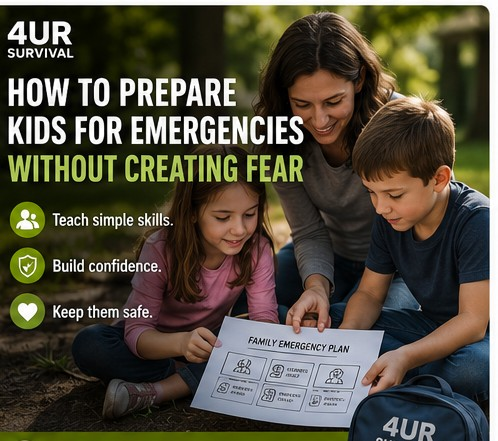
How to Prepare Kids for Emergencies Without Creating Fear
One of the biggest mistakes parents make is either:
- Not talking about emergencies at all
OR - Talking about them in a way that creates anxiety
The goal is balance: awareness without fear.
The Federal Emergency Management Agency recommends teaching children simple, repeatable actions instead of overwhelming detail.
Teach Kids 3 Core Skills
1. Know the Family Plan
- Where to meet if separated
- Who to call (one trusted contact outside the area)
2. Recognize Safety Signals
- Smoke alarm means exit immediately
- Earthquake = “Drop, Cover, Hold On”
- Storms = go to safe interior room
3. Emergency Kit Familiarity
Let kids know:
- Where the kit is
- What’s inside
- That it’s “our family safety backpack”
Make It a Normal Conversation
Instead of “what if something bad happens,” frame it as:
“Families who are prepared feel calmer when surprises happen.”
Real Parenting Win
Kids who practice emergency routines tend to feel more secure, not less. Predictability builds confidence.
8th Jun 2026
Recent Posts
-
Personal Safety & First Aid: Essential Preparedness for Everyday Life
Why Every Family Should Learn Basic Safety and First Aid Skills Emergencies rarely happen when it's …13th Jul 2026 -

Self-Reliance & Homesteading: Practical Steps You Can Start Today
Building a More Self-Reliant Lifestyle One Step at a Time In a world where prices seem to rise every …6th Jul 2026 -
Why More Families Are Stocking Emergency Supplies in 2026
Over the last few years, many families have started looking at emergency preparedness differently. W …29th Jun 2026